
Auto glass plays a major part in the design of modern vehicles. The glass in your vehicle acts as an important part of the design of the passenger compartment to withstand the crushing of the roof in a roll-over, and to manage energy transfer in less severe accidents.
The windshield is one of the primary safety components of vehicle design crash management, and it is utilized for passenger side air bag deployment. During an accident, a passenger-side air bag can blow an improperly installed windshield completely out of a vehicle.
A windshield that dislodges from the body of the vehicle will not provide the necessary support for the passenger compartment, nor allow the airbag to work properly.
The windshield is a major structural component of an automobile that must meet Federal crash and rollover standards. FMVSS
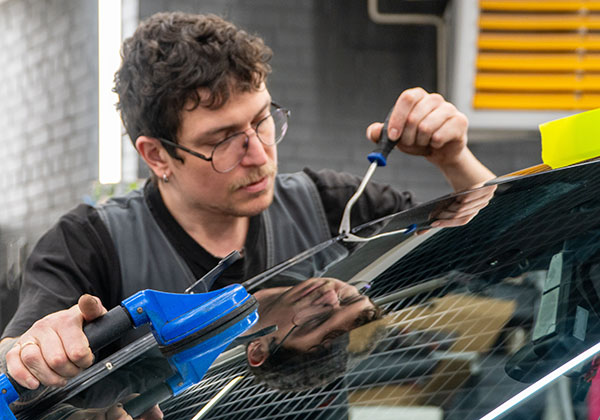
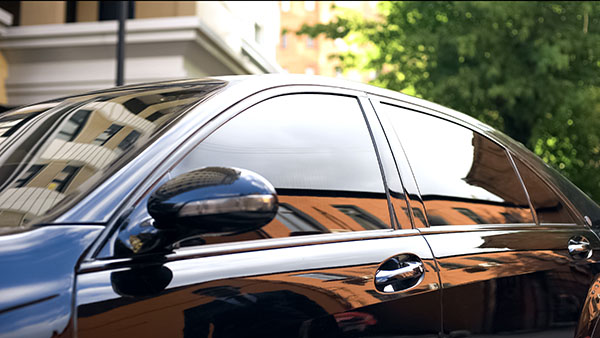
Tempered glass is a single layer of glass that is heat treated to increase impact resistance. It is heated to around 1100 Degrees (F) then rapidly cooled. It is made to size and shape, as it cannot be cut after manufacture.
Laminated glass consists of two panes of glass permanently bonded together with a tough interlayer of plastic under heat and pressure into a single piece.
Windshields are made up of two layers of tempered Glass and a central layer of Plastic. These are laminated together to form a visual and Structural unit in your car.
Tinting is done by adding metallic ingredients to the glass mixture during manufacturing. Depending on the ingredients used, the color and performance properties will be different. Tinted glass in vehicles are called variously, Solar, Privacy, and Shaded.
All vehicles sold in the United States must meet or exceed the following Federal Motor Vehicle Safety Standards
[FMVSS 49 CFR 571.208]
The airbag bounces off the windshield to absorb the initial deployment. This may shatter the windshield but as long as the windshield stays in place it is still serving its intended purpose.
FMVSS 49 CFR 571.216]
In an accident in which the vehicle rolls over, the strength of the front of the passenger compartment depends primarily upon the windshield. As much as 60% of roof strength is lost if the glass separates from the vehicle body resulting in a crushed roof.
[FMVSS 49 CFR 571.219]
If you are in a crash, it is important that debris from outside the vehicle not enter the passenger compartment and that passengers be kept inside the vehicle.
Older cars 1960’s had windshields in rubber gaskets to hold them in place
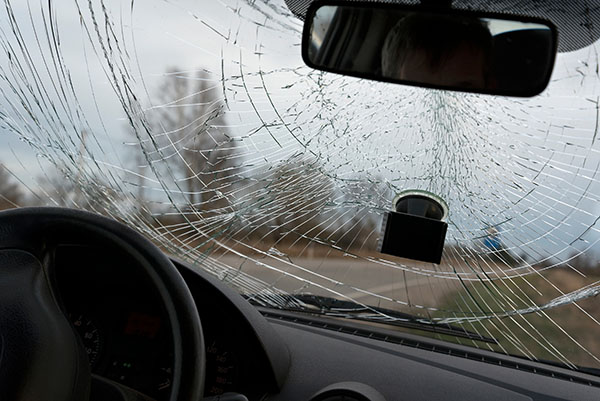
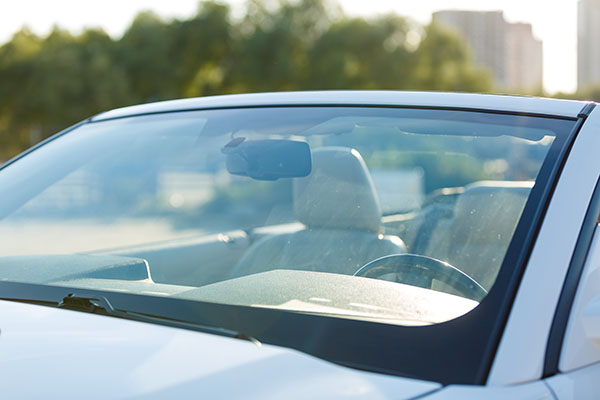
Compounds that are used to bond together different materials by surface attachment.
is actually plastic of varying densities and construction.
Has the exterior molding applied to the glass and is bolted thru the body from the inside.
Usually glued into the body and covered with trim on the outside of the body.
Federal Motor Vehicle Safety Standards.
Original Equipment Manufacturer. This means that the glass meets the original specifications for safety and quality as the glass that it came with from the factory.
Privacy Glass comes in a wide range of colors, depending on manufacturer and vehicle.
Shading refers to the dark color band on the top of most windshields.